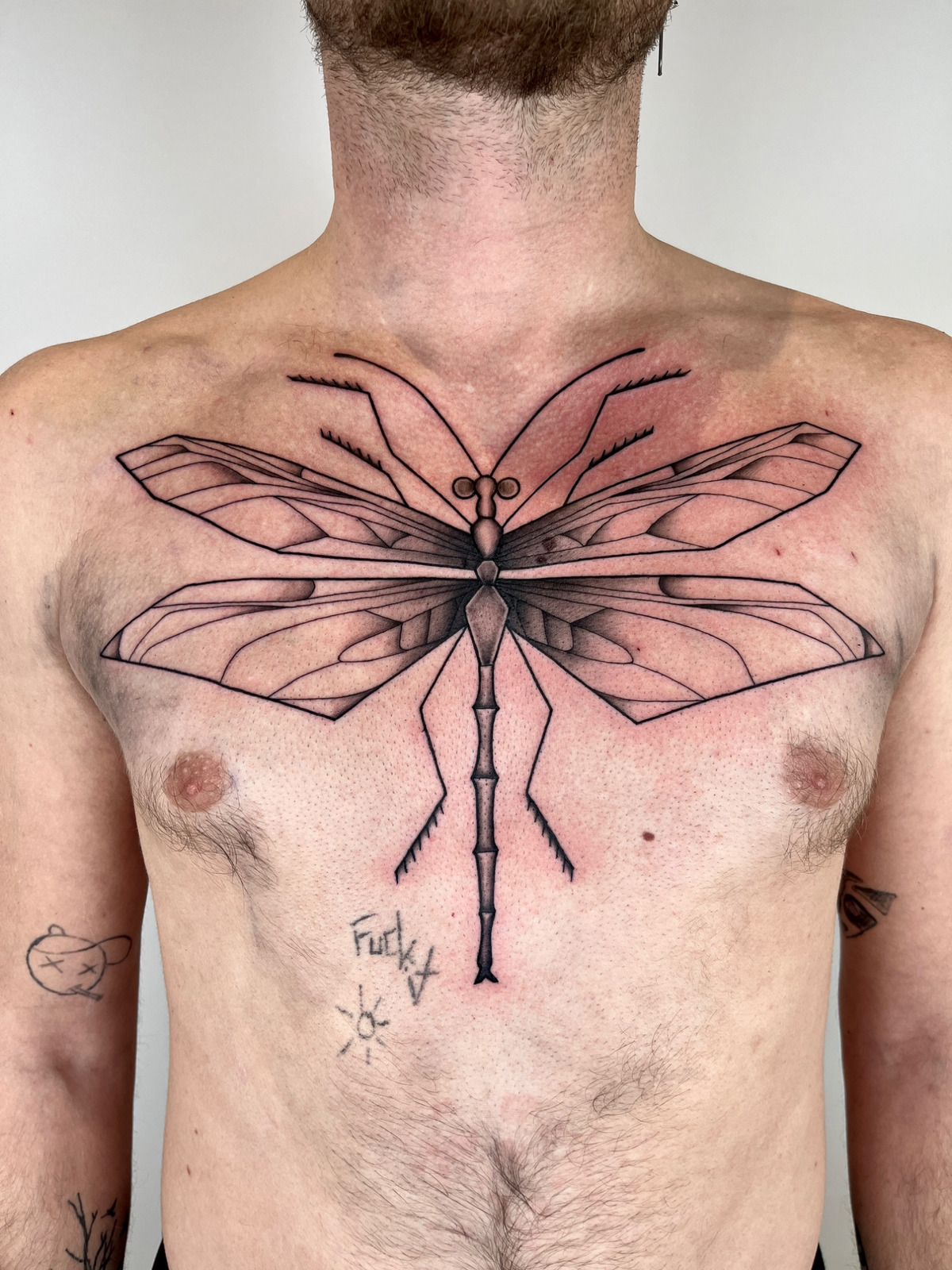
This tattoo shows a geometric dragonfly spanning the full width of a man's chest, tattooed by susigrck in Leipzig. The piece is rendered in black ink, featuring precise line work and subtle shading within the wings and body segments.
The price of a tattoo like this varies depending on several factors, including the motif's overall size, the level of detail within the geometric patterns, and its placement on the chest. An artist's experience and demand also play a role in their hourly or per-piece rates. For a concrete quote, direct contact with susigrck is the best approach.
The dragonfly motif has deep symbolic roots across many cultures. In some Native American traditions, it represents swiftness, activity, and change, often associated with the realm of dreams and illusions. For the Japanese, it symbolizes courage, strength, and happiness, and is sometimes seen as a harbinger of good fortune. In European folklore, dragonflies are occasionally linked to transformation and adaptability, reflecting their life cycle from nymph to winged insect. Its ability to move in all directions and hover also connects it to mental clarity and the shedding of old habits.
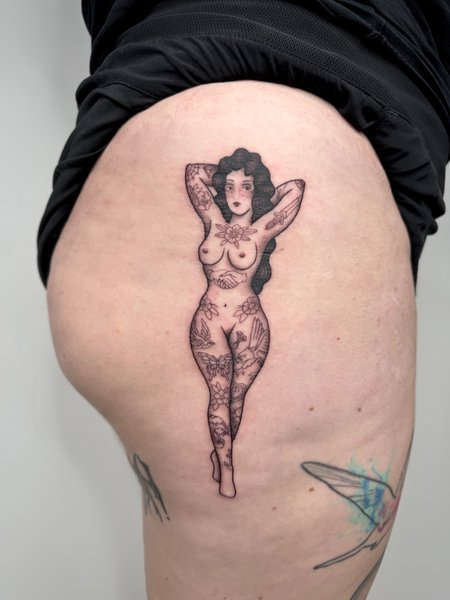
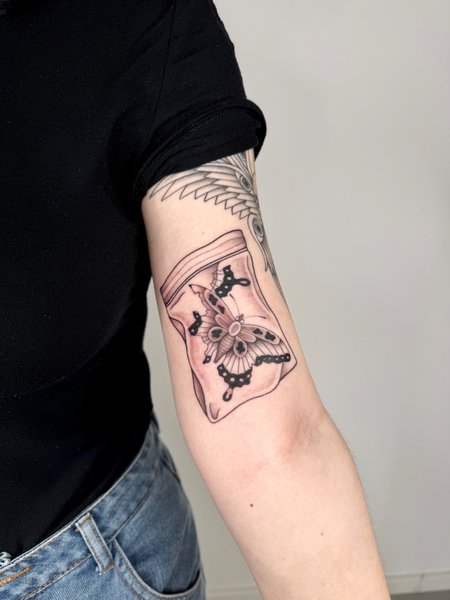
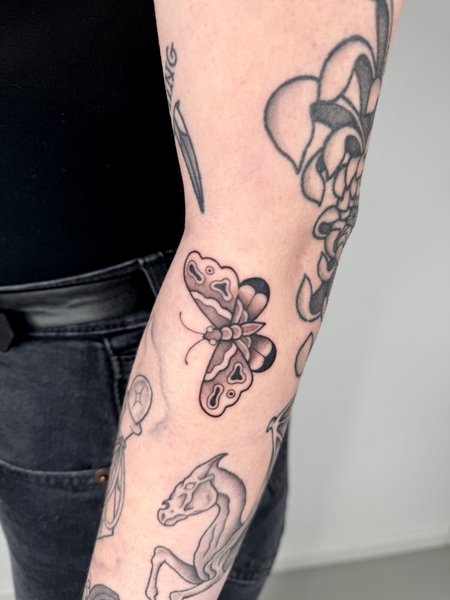
The tattoo incorporates elements of both Illustrative and Traditional styles. Illustrative tattooing is characterized by its artistic freedom and often combines realistic elements with abstract or stylized forms. It can draw from various art movements and frequently uses fine lines, detailed shading, and a broad spectrum of techniques to create a unique, often personalized image. Traditional tattooing, also known as Old School, is defined by bold outlines, a limited color palette (often black, red, green, yellow, and blue), and iconic imagery like anchors, swallows, and hearts. It prioritizes clear readability and durability, making designs that stand the test of time.
tathood:"This tattoo shows a geometric dragonfly spanning the full width of a man's chest, tattooed by susigrck in Leipzig. The"...