
o.T by misstrashflash
Halle, Germany (+2)
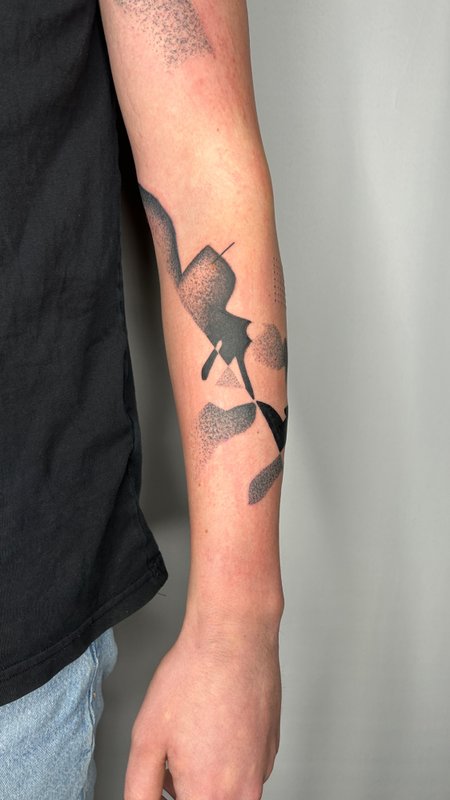
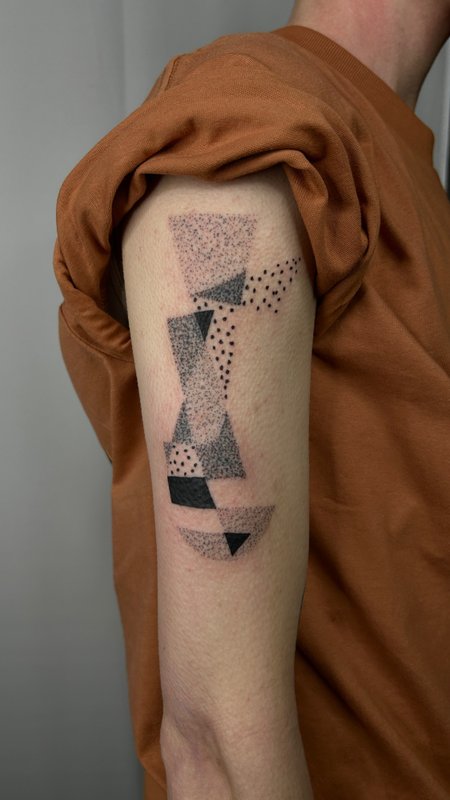
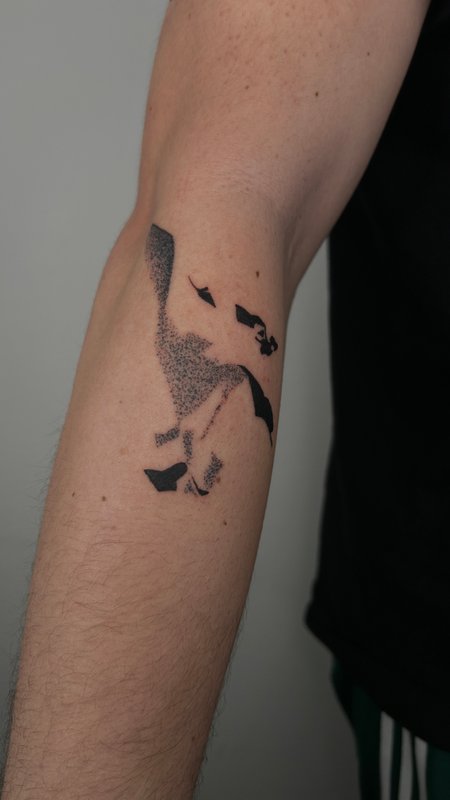
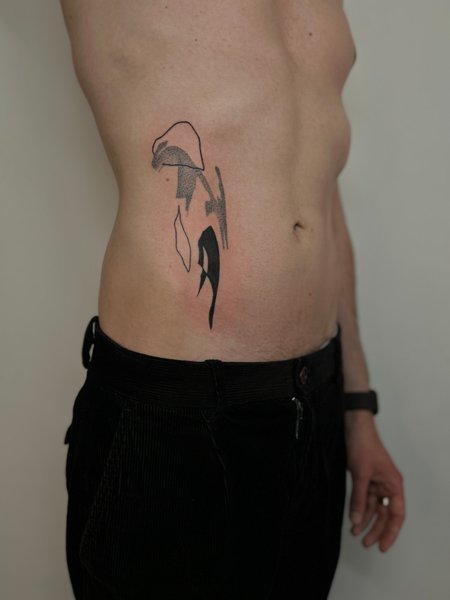
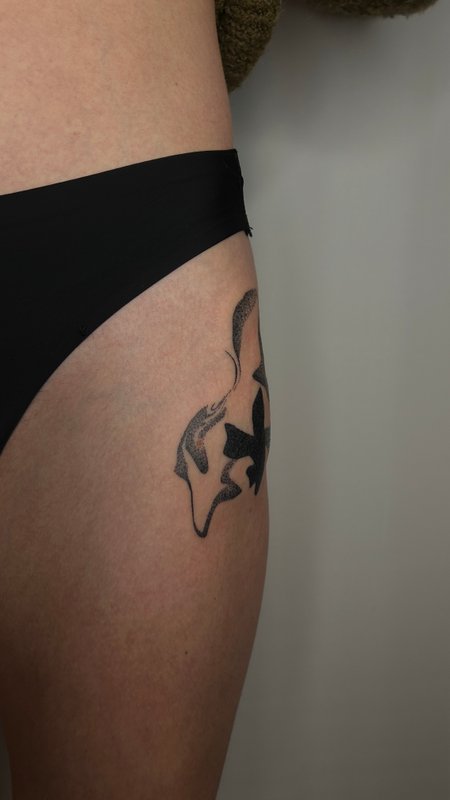
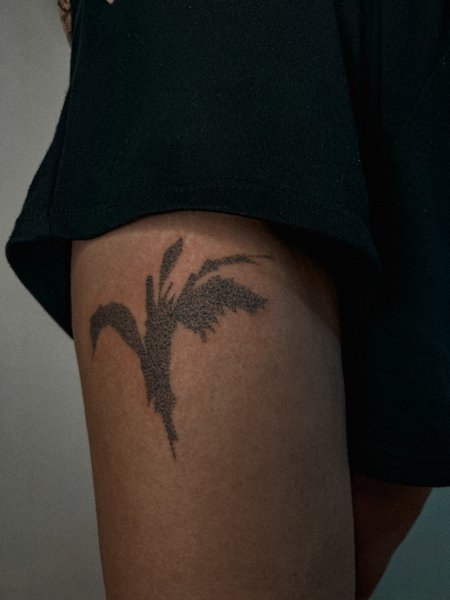
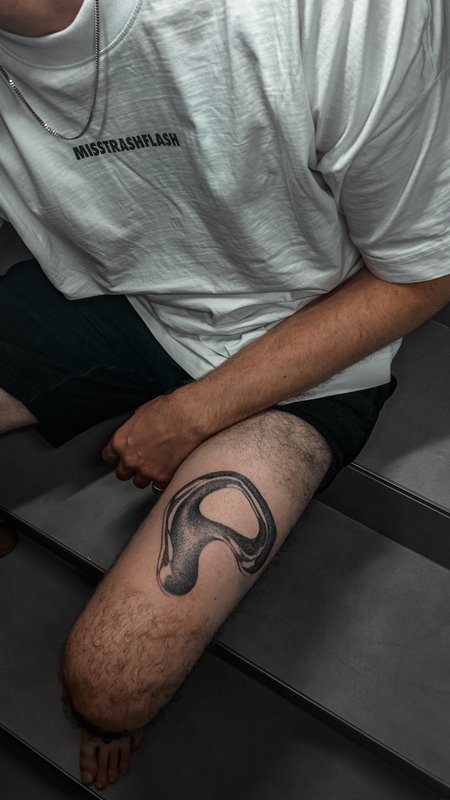
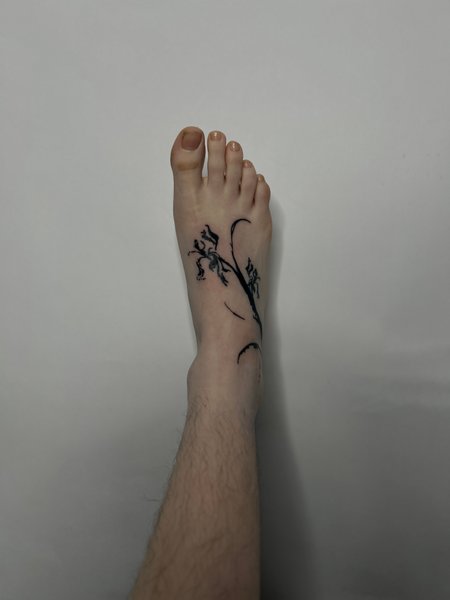
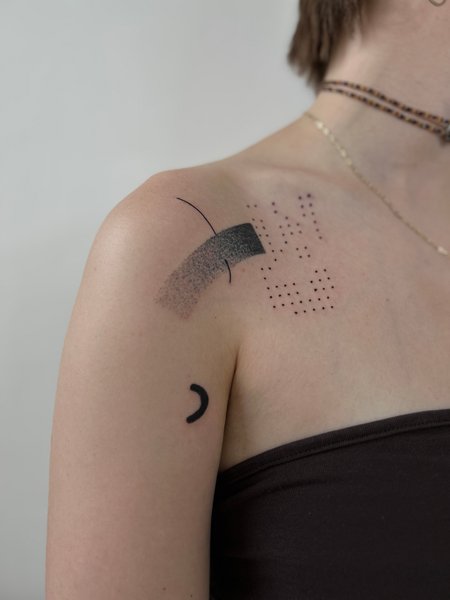
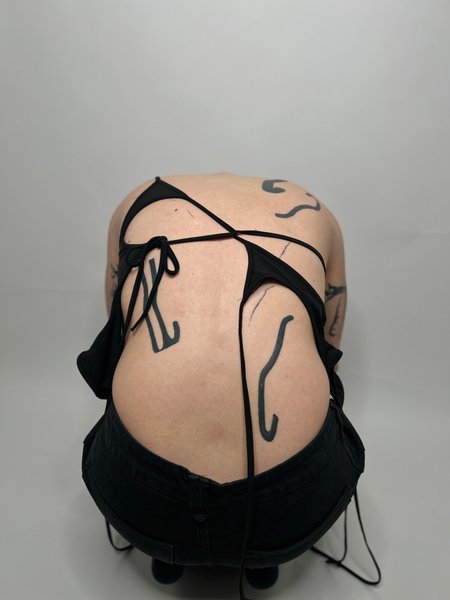
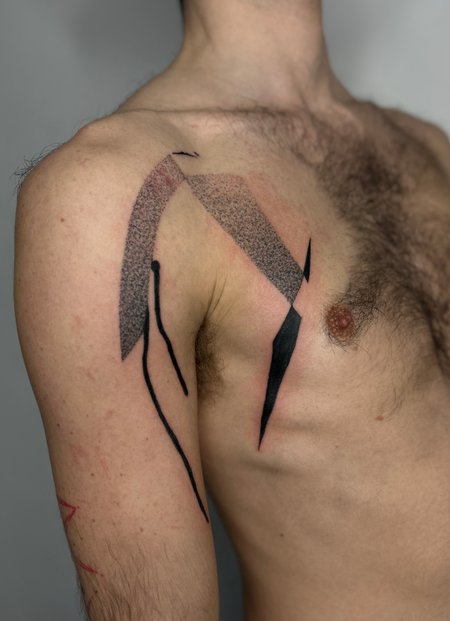
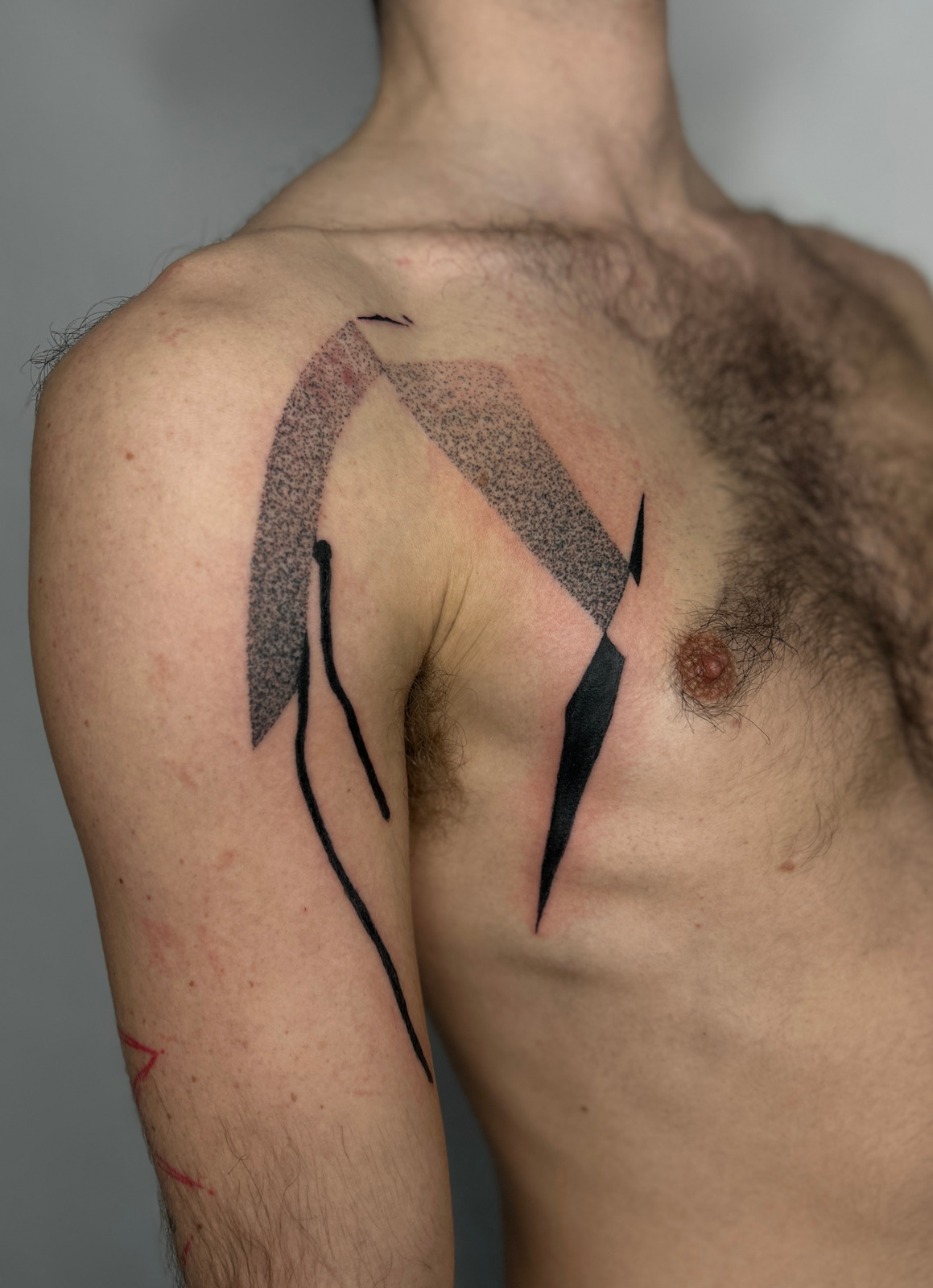
This abstract tattoo by misstrashflash from Halle features bold black lines and stippled shading, creating a composition of stark contrasts and dynamic forms. The design incorporates both solid black fill and areas of finely dotted texture. Tattoo pricing depends on several factors, including the complexity and size of the design, the chosen body placement, and the artist's experience level. The amount of detail involved and the time required for the session also influence the final cost. For a precise estimate, it’s best to contact misstrashflash directly. Abstract tattoos do not rely on recognizable objects or figures but instead use forms, colors, and textures to evoke emotion or represent concepts. This style allows for a wide range of personal interpretations, as the meaning is often subjective and can be deeply personal to the wearer. Historically, abstract art emerged in the early 20th century as artists moved away from literal representation, seeking to express inner experiences and ideas through non-objective means. In tattooing, abstract designs can symbolize freedom, individuality, or a connection to pure artistic expression, often reflecting a departure from traditional imagery. The tattoo uses an Abstract style, characterized by its departure from realistic representation. Abstract tattooing emphasizes shapes, lines, and patterns, often exploring visual elements for their intrinsic aesthetic value rather than their ability to depict the external world. Handpoked is the technique employed, which involves manually pushing ink into the skin without the use of a machine. This method allows for a high degree of control over individual dots and lines, often resulting in a softer, more organic finish and a distinct texture. Handpoked tattoos can vary from delicate fine-line work to dense, solid fills, and are known for their unique aesthetic and the meditative process of their creation.
tathood:"This abstract tattoo by misstrashflash from Halle features bold black lines and stippled shading, creating a"...