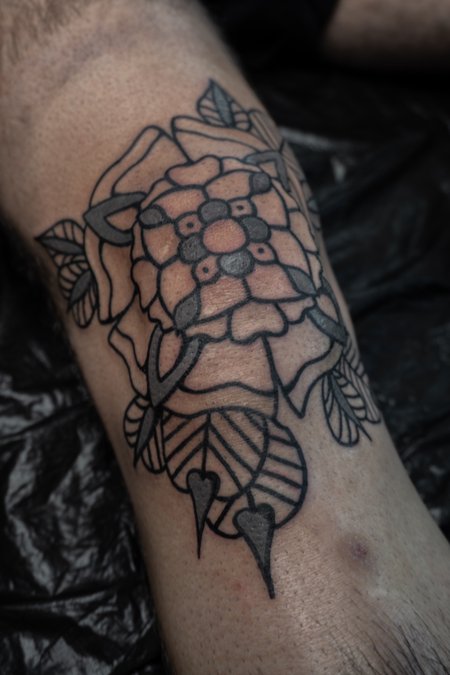
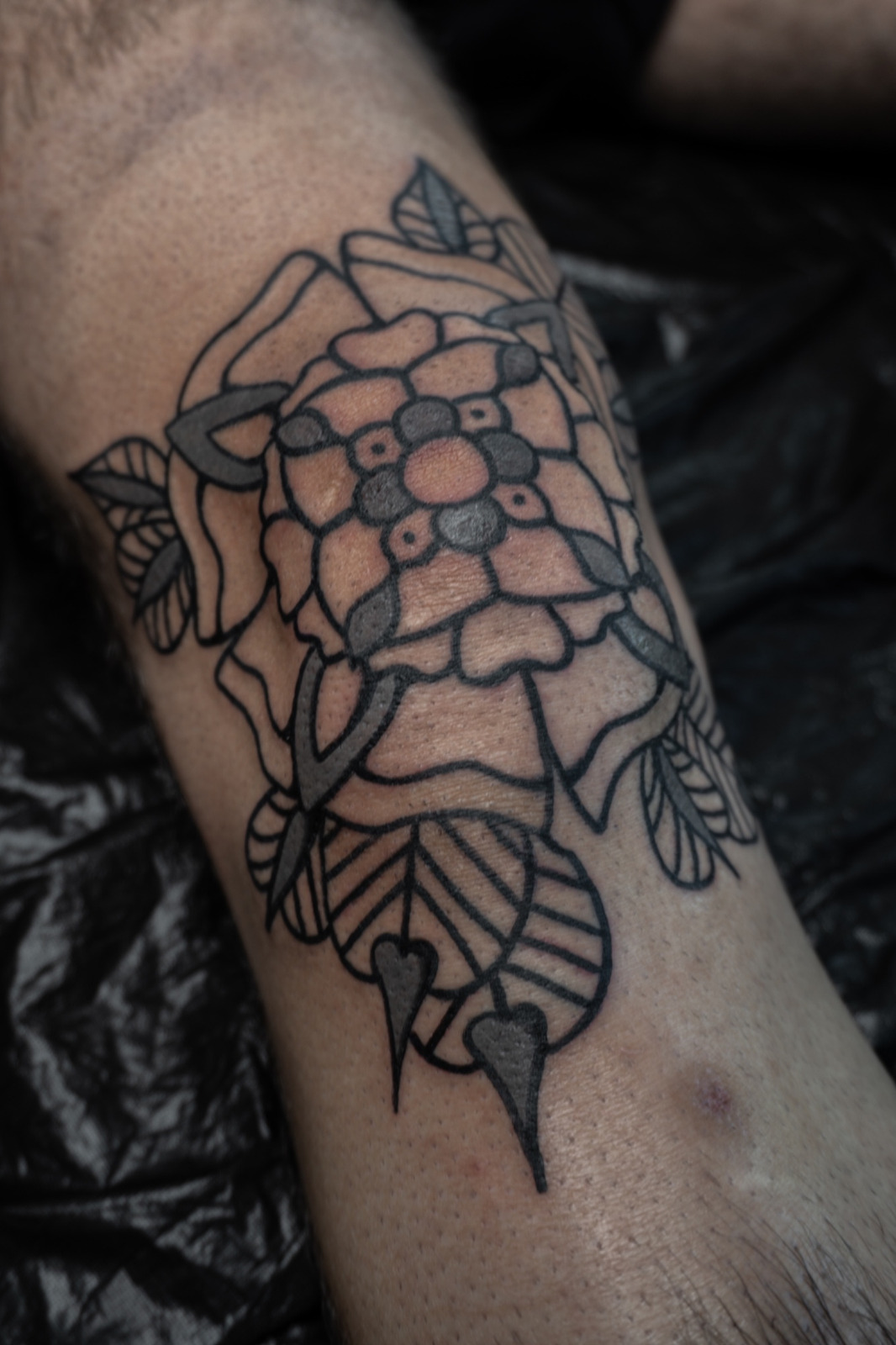

New school tattoo on the knee by habergaist.tattoo
Regensburg, Germany (+2)
This floral tattoo, a work in progress, is inked on a man's knee by Habergaist in Regensburg. The motif features a blooming flower with surrounding leaves, rendered in a palette of black and gray. The design uses solid black lines for outlines and details, with gray shading applied to certain petals and leaves, and a darker gray for the flower's center. The approximate price for a tattoo of this complexity and size, by an artist like Habergaist, is around €350. Tattoo pricing is not fixed; it varies depending on factors such as the tattoo's dimensions, the intricacy of the design, its placement on the body, and the artist's experience level. For a precise quote, direct consultation with the artist is always recommended. Floral motifs in tattooing carry a rich tapestry of meanings across various cultures and historical periods. Flowers often symbolize beauty, growth, and the cycle of life and death. Specific blossoms can convey more nuanced messages; for instance, a rose might represent love or passion, while a lotus can signify purity and spiritual enlightenment. In a broader sense, botanical tattoos can connect the wearer to nature, growth, and personal transformation. The enduring popularity of floral designs in tattooing reflects their versatile symbolism and aesthetic appeal. The tattoo incorporates elements from several styles, including Oldschool, Traditional, and New School. Oldschool and Traditional tattooing are characterized by bold black outlines, a limited color palette, and iconic imagery, often with a flat, two-dimensional appearance. New School tattooing, on the other hand, embraces a wider range of colors, exaggerated features, and a more illustrative, often cartoon-like aesthetic, allowing for greater depth and dynamic composition. The botanical and ornamental aspects refer to the subject matter and decorative elements, respectively.
More tattoos by habergaist.tattoo

Traditional dagger tattoo by habergaist.tattoo

Line work tattoo on the hand by habergaist.tattoo

Heavy blackwork tattoo on the upper arm by… habergaist.tattoo

Heavy blackwork tattoo on the forearm by… habergaist.tattoo

Comic tattoo on the upper arm by habergaist.tattoo

Traditional tattoo on the leg by habergaist.tattoo
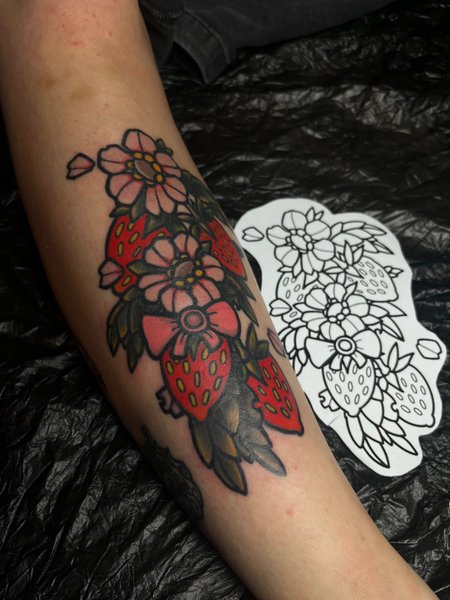
New school tattoo on the shin by habergaist.tattoo

Traditional rose tattoo by habergaist.tattoo

Illustrative heart tattoo by habergaist.tattoo
